1. Learning outcomes
By the end of this chapter, you should be able to:
- Explain the difference between repositioning existing mass, adding mass and removing mass.
- Predict the direction in which the CG moves in each case.
- Use the load-shifting relationship to calculate the mass to move or the resulting CG displacement.
- Calculate a new CG by recalculating total mass and total moment after addition or subtraction.
- Solve for an unknown mass needed to achieve a target CG.
- Maintain consistent units and signed arms, and verify the result against all applicable limits.
2. Core principles — what changes?
The centre of gravity is the point at which the aircraft's total mass may be considered to act. In a longitudinal mass-and-balance calculation, its position is found by dividing total moment by total mass.
For this chapter, use a consistent longitudinal sign convention. A station or arm may be positive or negative depending on its position relative to the datum. Do not discard signs when calculating moments.
3. Load shifting — repositioning existing mass
When a mass already on board is moved from one position to another, the total mass of the aircraft remains constant. Its moment changes because its arm changes. The CG moves towards the new position of the shifted load.
3.1 relationship
| Symbol | Meaning |
|---|---|
| m | Mass being repositioned |
| M | Total mass of the aircraft |
| d | Distance the aircraft CG moves |
| D | Distance through which the mass is moved |
3.2 Direction and geometry
- Move mass aft: CG moves aft.
- Move mass forward: CG moves forward.
- Move mass a greater distance: greater CG movement, all else equal.
- Move a greater mass: greater CG movement, all else equal.
- For the same movement, a heavier aircraft experiences a smaller CG displacement.
3.3 Worked source example — moving a load to the midpoint
the course's example gives total mass 10,000 kg, loaded CG at station +8 ft, safe range +10 to +16 ft, forward hold +5 ft and aft hold +20 ft. The midpoint is +13 ft. The CG must move 5 ft aft, while the load is moved 15 ft from the forward hold to the aft hold.
Therefore, 3,333.33 kg must be repositioned from the forward hold to the aft hold to achieve the target in this illustrative calculation. This is a study example, not an operational loading instruction.
3.4 Known mass moved — Example
This course gives a 200 lb load moved from the forward seats at +85.5 in to the aft seats at +157.5 in in an aircraft of 4,451 lb. D = 72 in. The CG shift is (200 × 72) ÷ 4,451 = 3.235 in aft.
4. Load addition — introducing new mass
Adding mass has two simultaneous effects: it increases the aircraft's total mass and changes the total moment. The CG moves towards the station at which the new mass is added.
New moment = (M × old CG) + (m × added-load arm)
New CG = New moment ÷ New mass
Where M is the original aircraft mass and m is the added mass. This direct moment method is a reliable way to solve addition problems.
4.1 Direction
- Add mass aft of the existing CG: CG moves aft.
- Add mass forward of the existing CG: CG moves forward.
- Add mass at the existing CG: CG remains at the same position, although total mass increases.
- Add mass at the datum: the added load contributes zero moment about that datum, but the aircraft CG generally moves towards the datum.
4.2 Solving for the amount to add
If a target CG is specified, use the moment equation and solve for the unknown added mass:
5. Load subtraction — removing mass
Removing mass reduces both total mass and total moment. The CG moves away from the position from which the mass is removed.
New moment = (M × old CG) − (m × removed-load arm)
New CG = New moment ÷ New mass
5.1 Direction
- Remove mass from aft of the CG: the CG moves forward.
- Remove mass from forward of the CG: the CG moves aft.
- Remove mass acting exactly at the CG: the CG position remains unchanged.
5.2 passenger cancellation example
the course's example: loaded mass 4,451 lb, loaded CG +92.0 in; two rear passengers with combined mass 294 lb cancel. Their seats are at +157.5 in. New mass = 4,451 − 294 = 4,157 lb. Distance from original CG to the removed mass station = 157.5 − 92 = 65.5 in.
New CG = 92.0 − 4.632 = +87.37 in
The CG moves forward because the mass was removed from aft of the original CG.
5.3 Solving for mass to remove
6. Ballast and correcting an out-of-limit CG
6.1 The principle of ballast
Suppose an aircraft's CG is aft of the permitted aft limit. Adding mass forward of the CG can move the CG forward. Conversely, if the CG is too far forward, adding mass aft of the CG can move it aft. Removing mass can also correct an out-of-limit condition, provided the mass is removed from the appropriate side of the CG.
6.2 the course's datum-based ballast equation
This course presents the addition of ballast using total moments measured from the datum. Let M be the original aircraft mass, X the original CG arm, m the ballast mass, Z the ballast arm, and Y the desired new CG arm. The new mass is M + m.
Rearranging:
6.3 Minimum correction versus operationally suitable correction
The mathematical minimum may bring the CG exactly onto the nearest limit. This course notes that it may be preferable to bring the CG further inside the permitted range. The calculated correction must also be checked for take-off and landing conditions. In practice, the aircraft-specific approved data and operator procedures determine what correction is permitted and how ballast is secured and recorded.
6.4 Temporary and permanent ballast — supplementary context
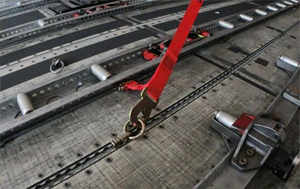
Ballast may be temporary for a particular loading condition or permanent following an approved modification/repair. FAA guidance describes permanent ballast as a structural installation that must be secured and must not interfere with controls or become dislodged. Temporary ballast also has to be secured against movement. These are supplementary FAA examples, not a replacement for Rwanda CAA requirements or aircraft-specific approved data.
7. Compare the three cases
| Operation | Total mass | Total moment | CG direction |
|---|---|---|---|
| Shift existing mass | Unchanged | Changes by mass × change in arm | Towards new load position |
| Add mass | Increases | Increases or decreases according to signed arm | Towards added mass |
| Subtract mass | Decreases | Removed moment is deducted | Away from removed mass |
8. A reliable calculation workflow
- Write down the original aircraft mass and CG or total moment.
- Identify whether the operation is a shift, addition or subtraction.
- Record the mass and the correct original and/or new station.
- Keep all arms in the same unit and apply a consistent sign convention.
- Calculate the moment change or new total moment.
- Calculate the new total mass where mass is added or removed.
- Divide new total moment by new total mass to find the new CG.
- Check the direction of movement against the physical situation.
- Check the new CG against the permitted envelope and separately check all mass limits.
9. Worked examples and practice calculations
These examples are original teaching exercises. They expand the principles using different values and operational-style situations. Unless stated otherwise, values are illustrative and are not aircraft-specific limitations.
Aircraft mass 12,000 kg; 250 kg moved 18 m aft. CG shift = (250 × 18) / 12,000 = 0.375 m aft. New CG = old CG + 0.375 m.
Total mass 10,000 kg; CG must move 0.60 m; load moved 12 m. m = (M × d) / D = (10,000 × 0.60) / 12 = 500 kg.
Aircraft 8,400 kg; 160 kg moved 9 m forward. Shift = 160 × 9 / 8,400 = 0.1714 m forward.
Aircraft 15,000 kg; 300 kg moved 20 m aft. Shift = 300 × 20 / 15,000 = 0.40 m aft.
A 90 kg bag moves from arm 6 m to arm 11 m. Change in moment = 90 × (11 − 6) = 450 kg·m; on 9,000 kg aircraft, CG moves 0.05 m aft.
Total mass 10,000 kg; CG +8 ft; safe range +10 to +16 ft; midpoint +13 ft; move load from +5 to +20 ft. d=5 ft; D=15 ft; m=10,000×5/15=3,333.3 kg.
Total mass 4,451 lb; 200 lb moved from +85.5 in to +157.5 in. D=72 in; shift=200×72/4,451=3.235 in toward aft seats.
A 120 kg item moves 2.5 m aft in a 6,000 kg aircraft. CG shift=120×2.5/6,000=0.050 m aft.
1,000 kg aircraft? Use 10,000 kg total. Move 100 kg 4 m aft and 50 kg 6 m forward. Net moment change=400−300=100 kg·m aft; CG shift=0.010 m aft.
Initial CG 7.20 m; 400 kg moved 5 m aft in 20,000 kg aircraft. Shift=0.10 m; final CG=7.30 m.
Initial mass 8,000 kg, CG 10 m; add 400 kg at 16 m. New CG=(8,000×10+400×16)/8,400=10.286 m.
Initial mass 5,000 kg, CG 8 m; add 250 kg at 2 m. New CG=(40,000+500)/5,250=7.714 m.
Aircraft 12,000 kg; initial CG 9 m; add 600 kg at 14 m. New CG=(108,000+8,400)/12,600=9.238 m; shift=0.238 m aft.
Initial mass 10,000 kg, CG 8 m; add mass at 18 m to reach 8.5 m. Solve (80,000+18m)/(10,000+m)=8.5; m=588.24 kg.
Aircraft 7,500 kg with CG 11 m; add 300 kg at 11 m. New CG remains 11 m because added mass acts at the existing CG.
Aircraft 9,000 kg, CG 6 m; add 500 kg at 0 m. New CG=54,000/9,500=5.684 m; moves toward datum.
Existing mass 4,000 kg, moment 28,000 kg·m; add 200 kg at 10 m. New mass=4,200 kg; moment=30,000; CG=7.143 m.
Aircraft 6,800 kg; add 350 kg. New mass=7,150 kg. If maximum permitted mass is 7,000 kg, reject regardless of CG.
Mass 10,000 kg, CG +2 m; add 500 kg at −4 m. New CG=(20,000−2,000)/10,500=1.714 m.
Aircraft 10,000 kg, moment 80,000 kg·m. Add 200 kg at 12 m and 300 kg at 4 m. New moment=83,600; mass=10,500; CG=7.962 m.
Initial mass 8,000 kg, CG 10 m; remove 400 kg at 16 m. New CG=(80,000−6,400)/7,600=9.684 m; moves forward.
Initial mass 5,000 kg, CG 8 m; remove 250 kg at 2 m. New CG=(40,000−500)/4,750=8.316 m; moves aft.
Aircraft 12,000 kg, CG 9 m; remove 600 kg at 14 m. New CG=(108,000−8,400)/11,400=8.737 m.
Initial mass 10,000 kg, CG +8 ft; target +13 ft; remove from +5 ft. Method: d=5 ft; D=8 ft; m/M=d/D; m=6,250 kg (using original mass as specified in the worked method).
Loaded 4,451 lb, CG +92.0 in; remove 294 lb from aft seats +157.5 in. New mass=4,157 lb; D=65.5 in; shift=(294×65.5)/4,157=4.632 in forward; new CG=+87.37 in.
Aircraft 6,000 kg, CG 9 m; remove 250 kg at 9 m. New CG remains 9 m.
Aircraft 9,000 kg, CG 6 m; remove 500 kg at 0 m. New CG=54,000/8,500=6.353 m; moves away from datum.
Aircraft mass 10,000 kg, moment 70,000 kg·m. Remove 100 kg at 4 m and 200 kg at 12 m. New mass=9,700 kg; moment=66,000; CG=6.804 m.
Aircraft 7,400 kg; offload 500 kg. New mass=6,900 kg. Recalculate CG from the removed item's actual arm; do not assume CG is unchanged.
Aircraft 4,451 kg, CG 9.2 m; remove 134 kg from arm 15.75 m. Original moment=40,949.2 kg·m; removed moment=2,110.5 kg·m; new mass=4,317 kg; new moment=38,838.7 kg·m; new CG=8.997 m.
A 200 kg item moved 5 m in 10,000 kg aircraft shifts CG by 0.10 m; adding 200 kg at a point 5 m from the original CG gives a different result because total mass increases.
Aircraft 9,000 kg, moment 63,000. Add 100 kg at 12 m then remove 50 kg at 4 m. Final mass=9,050 kg; moment=63,? 63,000+1,200−200=64,000; CG=7.072 m.
Aircraft 20,000 kg. Move 150 kg 8 m aft and 100 kg 6 m forward. Net moment change=1,200−600=600 kg·m; CG shift=0.03 m aft.
Mass 6,250 kg; total moment 43,750 kg·m. CG=43,750/6,250=7.0 m. If a 250 kg item is moved from 5 m to 9 m, new moment=44,750; CG=44,750/6,250=7.16 m.
Aircraft mass 50,000 kg, moment −225,000 kg·ft; add item with moment −135,000 kg·ft. New moment=−360,000; if added mass is 3,000 kg, new mass=53,000; CG=−6.792 ft.
Aircraft 14,000 kg needs 0.25 m aft movement; 175 kg is available. Required travel D=M×d/m=14,000×0.25/175=20 m aft.
Aircraft 7,500 kg; 125 kg can be moved 6 m. CG shift=125×6/7,500=0.10 m.
A 220 lb load is moved 12 ft in a 11,000 lb aircraft. CG shift=220×12/11,000=0.24 ft=2.88 in.
Aircraft 10,000 kg, CG 8 m. Move 250 kg from 4 m to 12 m. Initial moment=80,000; moment change=250×8=2,000; new CG=82,000/10,000=8.2 m.
A planned 300 kg container at arm 14 m is replaced by a 340 kg unit at the same arm. Difference +40 kg; update mass and moment by +40 kg and +560 kg·m respectively.
An 18,000 kg aircraft has a 240 kg container moved 14 m forward. CG shift = 240 × 14 ÷ 18,000 = 0.187 m forward. Total mass remains 18,000 kg.
An aircraft of 9,600 kg must move its CG 0.15 m aft by shifting 120 kg. Required distance D = M × d ÷ m = 9,600 × 0.15 ÷ 120 = 12 m aft.
Move 80 kg 5 m aft and 50 kg 4 m forward in a 10,000 kg aircraft. Net moment change = +400 − 200 = +200 kg·m. CG shift = 200 ÷ 10,000 = 0.020 m aft.
Original mass 7,500 kg, CG 6.4 m. Add 350 kg at 11.0 m. New moment = 7,500 × 6.4 + 350 × 11 = 51,050 kg·m. New mass = 7,850 kg. New CG = 6.503 m aft.
Original mass 6,200 kg, CG 5.8 m. Add 180 kg at 2.0 m. New moment = 35,960 − 684 = 35,276 kg·m. New mass = 6,380 kg. New CG = 5.529 m, forward of the original CG.
An aircraft of 12,000 kg has CG at 8.25 m. Add 400 kg at 8.25 m. New moment = 12,400 × 8.25; new CG remains 8.25 m.
Original mass M=5,000 kg; original CG X=7.2 m; target Y=7.0 m; ballast station Z=2.0 m. m = M(Y−X)/(Z−Y) = 5,000(−0.2)/(−5.0) = 200 kg. The ballast is forward of the original CG and moves it forward.
Original mass 8,000 kg; CG 9.4 m; target 9.0 m; ballast station 3.0 m. m = 8,000(9.0−9.4)/(3.0−9.0) = 533.33 kg. Verify mass limits and the approved ballast station before use.
Original mass 4,500 kg; CG 6.0 m; target 6.3 m; ballast station 10.0 m. m = 4,500(0.3)/(10.0−6.3) = 364.86 kg.
Original mass 9,000 kg, CG 8.0 m. Remove 250 kg at 13.0 m. New moment = 72,000 − 3,250 = 68,750 kg·m; new mass = 8,750 kg; new CG = 7.857 m forward.
Original mass 9,000 kg, CG 8.0 m. Remove 250 kg at 2.0 m. New moment = 72,000 − 500 = 71,500 kg·m; new mass = 8,750 kg; new CG = 8.171 m aft.
Original mass 10,000 kg and moment 75,000 kg·m. Remove 100 kg at 4 m and 150 kg at 12 m. New mass = 9,750 kg; new moment = 75,000 − 400 − 1,800 = 72,800 kg·m; new CG = 7.467 m.
Original mass 6,800 kg, moment 51,000 kg·m. A 160 kg passenger group at arm 9.5 m cancels. New mass = 6,640 kg; new moment = 51,000 − 1,520 = 49,480 kg·m; new CG = 7.452 m. Reissue the final load data under the operator's process.
A planned 420 kg container at arm 13 m is replaced by a 465 kg container at the same arm. Difference is +45 kg and +585 kg·m. Add these changes to the previous loading totals, then recompute the CG.
After a correction, the new CG is within the envelope, but the added ballast causes the aircraft to exceed its maximum take-off mass. The loading remains unacceptable. CG and mass limitations are separate checks.
10. Common errors and examination traps
- Using the original mass as denominator after a load has been added or removed when the direct moment method requires the new mass.
- Assuming a load shift changes total aircraft mass.
- Reversing the direction of CG movement after subtraction.
- Using the destination arm instead of the distance travelled for a shift calculation.
- Mixing feet and inches, kilograms and pounds, or incompatible moment units.
- Dropping negative signs from stations and moments.
- Rounding intermediate values too early.
- Assuming a CG inside limits means the aircraft is within maximum mass, floor, compartment or other structural limits.
- Failing to update documentation after passenger cancellations, offloads, substitutions or last-minute changes.
11. Operational application
In a real operation, load changes may arise from passenger no-shows, baggage offloads, cargo substitutions, seat changes, last-minute freight, or repositioning to correct a loading condition. The person responsible for load control must use the approved aircraft data and operator procedures, not a generic example formula alone.
Every actual change must be reflected in the final load information. Verify the actual item mass, station, compartment restrictions, total aircraft mass, CG and all other relevant limitations. If the correct arm, mass or approved procedure is uncertain, stop and obtain the authoritative aircraft/operator data.
12. Chapter summary
- Shifting mass keeps total mass constant and moves the CG towards the new load position.
- For a shift, This course gives m/M = d/D.
- Adding mass increases total mass and moves CG towards the added load.
- Removing mass decreases total mass and moves CG away from the removed load.
- Moment calculations provide a reliable common method for addition and subtraction.
- Use consistent signs and units, then recheck all applicable limitations and documentation.
13. Knowledge check — 40 questions
Select one answer for each question, then submit to see your score and explanations.
Further study
- UK CAA CAP 697 and CAP 698 — public training data sheets for flight planning and performance (caa.co.uk).
Supplementary explanation
Images are linked from Wikimedia Commons using direct file paths. Hosts can change paths or block hotlinking; verify each image and its licence before publishing the chapter publicly.