By the end of this module you will be able to:
- Explain the difference between landside and airside
- Identify the main parts of an airport, from terminal to runway
- Read a runway number and say which way it points
- Follow the steps of a passenger's departure and arrival
- Describe what happens during an aircraft turnaround
- Explain how airports manage safety and security
SECTION 01Welcome to the airport
To a passenger, an airport is a terminal, a queue and a gate. Behind the walls it is one of the most carefully organised workplaces in the world.
An airport (in official language, an aerodrome) is an area of land with the buildings, equipment and services needed for aircraft to take off, land and be prepared for flight. A large international airport is like a small city: it has its own fire service, police, medical team, power supply, fuel storage, shops, offices and thousands of workers from dozens of different companies.
All of these groups share one goal: to move passengers, baggage, cargo and aircraft safely, securely and on time.
SECTION 02Landside and airside
Every airport is divided into two zones, separated by a security checkpoint. Understanding this split is the key to understanding how an airport works.
| Zone | Who can enter | What happens there |
|---|---|---|
| Landside | Anyone: passengers, families, drivers, visitors | Drop-off, car parks, check-in, bag drop, ticket offices, arrivals hall |
| Airside | Screened passengers with a boarding pass, and staff with an authorised airport ID | Departure lounges, gates, aircraft stands, taxiways, runways, baggage sorting, fuelling |
The airside itself contains the movement area, everywhere aircraft move on the ground. It is made up of the apron, where aircraft park, and the manoeuvring area (taxiways and runways), which is controlled by air traffic control. No person or vehicle may enter the manoeuvring area without permission from the control tower.
SECTION 03The main parts of an airport
How to read a runway number
Runways are named after the compass direction they point, divided by ten and rounded. A runway pointing towards 100° (roughly east) is Runway 10. The same strip of tarmac used in the opposite direction points to 280°, so it is Runway 28. The two ends are therefore always 18 apart.
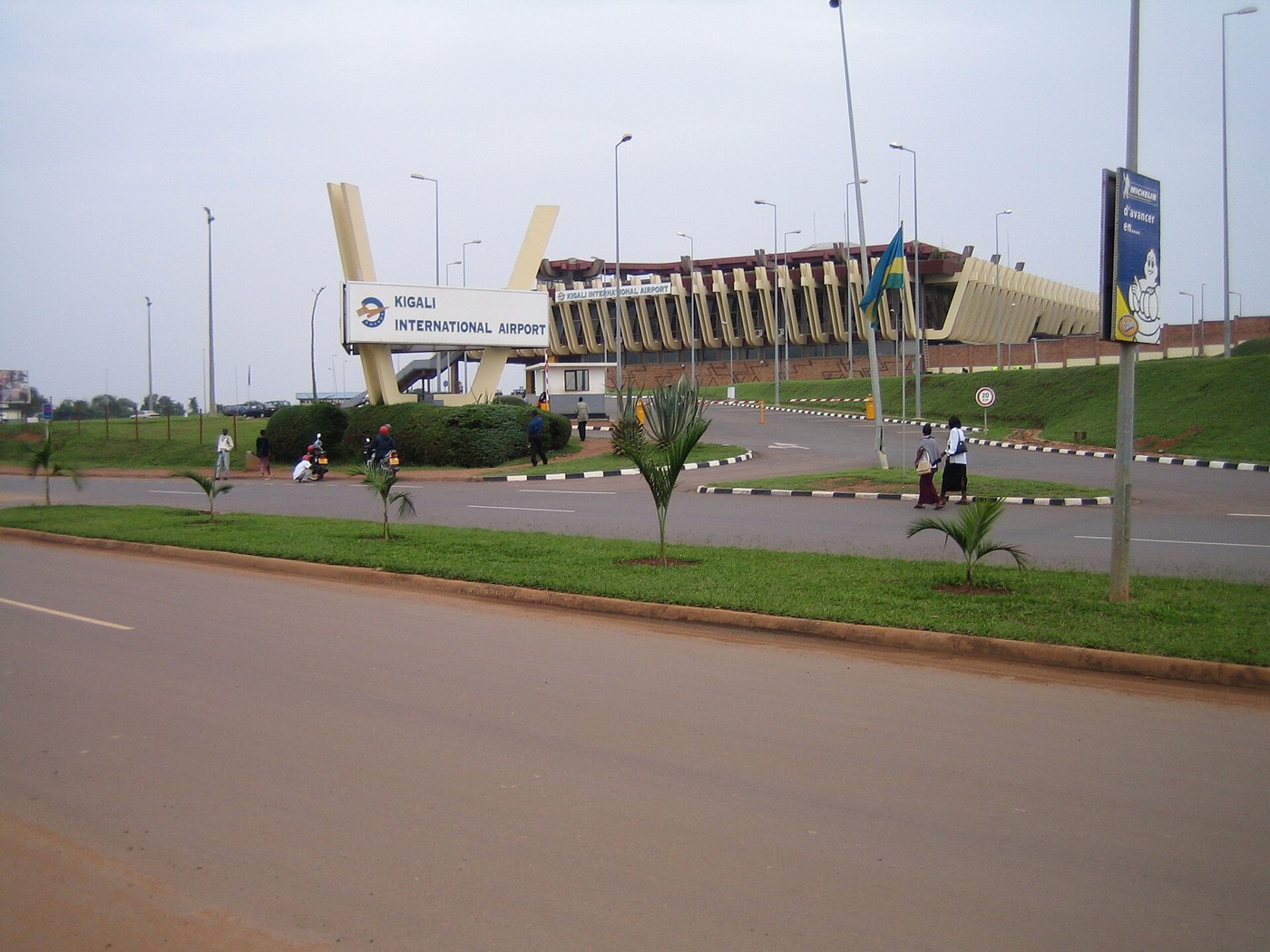
Kigali International Airport has a single runway, 10/28, running roughly east–west. Depending on the wind, aircraft take off and land either towards the east (Runway 10) or towards the west (Runway 28). Because the airport is high and often warm, the long runway is important for heavy aircraft taking off on long-haul flights.
SECTION 04The passenger journey
Let us follow Aline, a student flying from Kigali to Dubai. Every step she takes is supported by a different team.
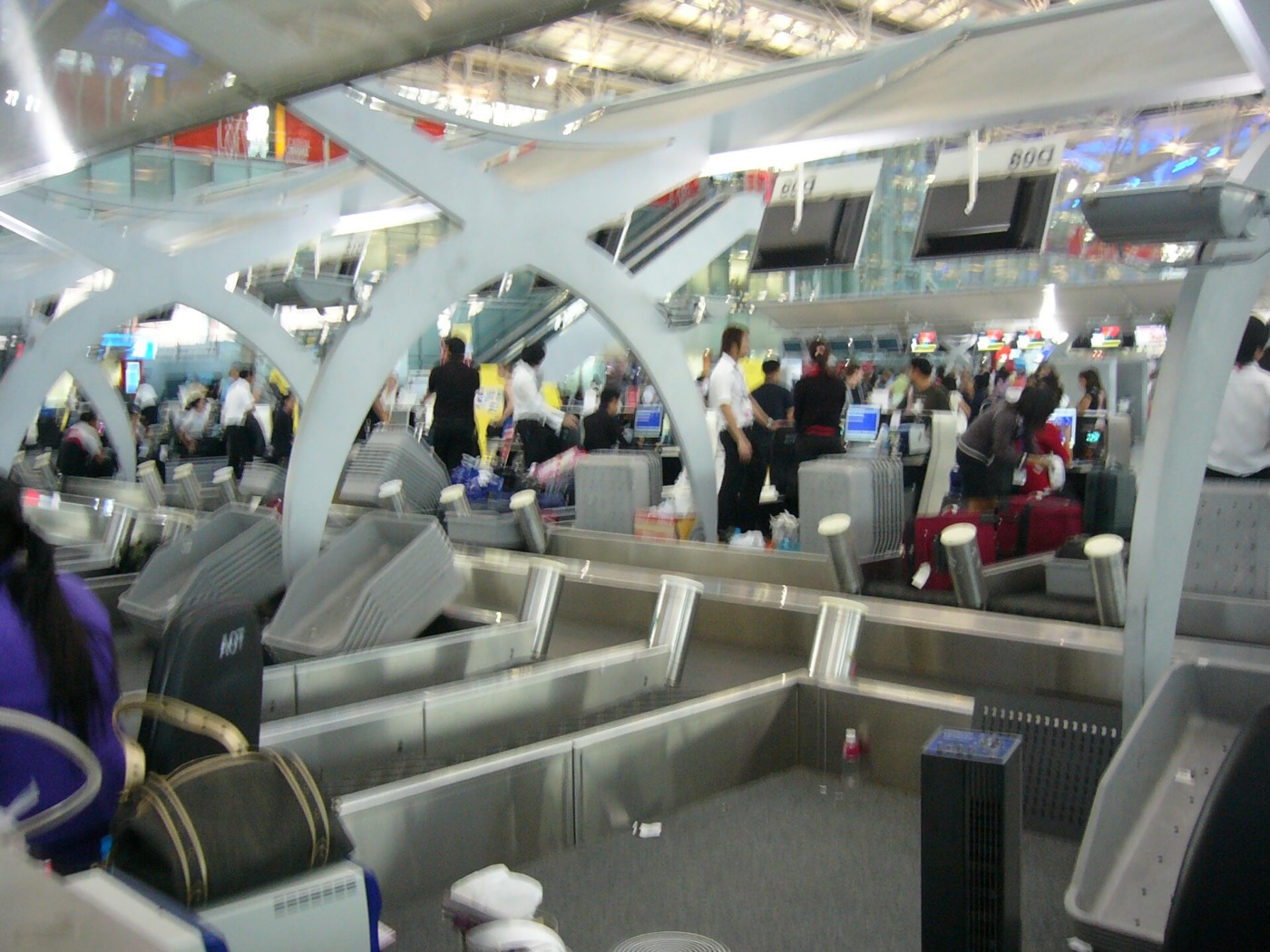
- Arrive and check inAline arrives about three hours before her international flight. At the check-in counter, an agent checks her passport and visa, confirms her booking and prints her boarding pass. Her suitcase is weighed, tagged with the code DXB and sent down the conveyor belt.
- Security screeningHer hand luggage goes through an X-ray machine and she walks through a metal detector. Liquids, sharp items and dangerous goods are restricted. This is the border between landside and airside.
- EmigrationImmigration officers check her passport and record that she is leaving Rwanda.
- Departure loungeShe waits airside, watching the screens for her gate number. Shops, restaurants and lounges serve passengers here.
- BoardingGate agents scan boarding passes and check documents again. Passengers walk to the aircraft or take an apron bus to a remote stand.
- On boardCabin crew welcome passengers, check seat belts and give the safety briefing. The doors close and the aircraft pushes back.
Arriving passengers
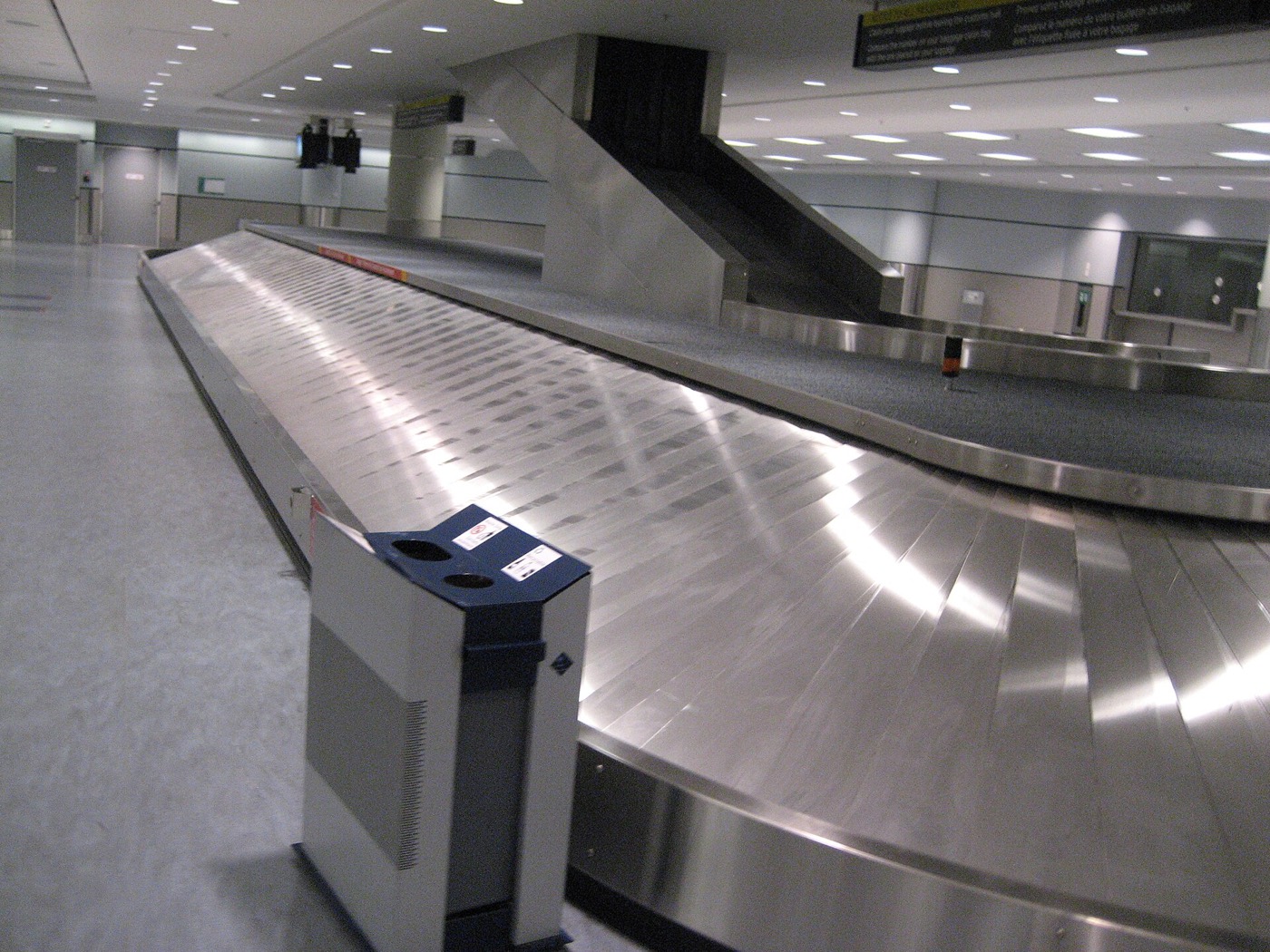
Arrival is the same journey in reverse: disembark, walk or bus to the terminal, pass immigration (passport control), collect bags from the reclaim carousel, pass through customs (who check goods being brought into the country) and out into the arrivals hall.
The large letters on a bag tag are the destination's IATA code: KGL Kigali, NBO Nairobi, EBB Entebbe, DAR Dar es Salaam, ADD Addis Ababa, DXB Dubai, LHR London Heathrow. Baggage systems also read a barcode on the tag to send each bag to the right aircraft.
SECTION 05Baggage and cargo
When Aline's suitcase disappears through the curtain at check-in, it begins a journey of its own:
- ScreeningEvery checked bag is X-rayed for prohibited items, usually automatically.
- SortingThe tag is scanned, and the bag is sorted to the area for her flight.
- LoadingHandlers load it into the aircraft hold, loose or in a container. The load controller records the weight and position of everything on board.
- ReconciliationThe system checks that every bag on board belongs to a passenger who has actually boarded. If a passenger does not show up, their bag is removed before departure for security.
Air cargo
Below the passengers' feet, most airliners also carry cargo: mail, parcels, medicines, machinery, documents and perishable goods. Cargo is booked by freight forwarders, cleared by customs, packed onto pallets or into shaped containers called ULDs (unit load devices), and loaded into the hold.
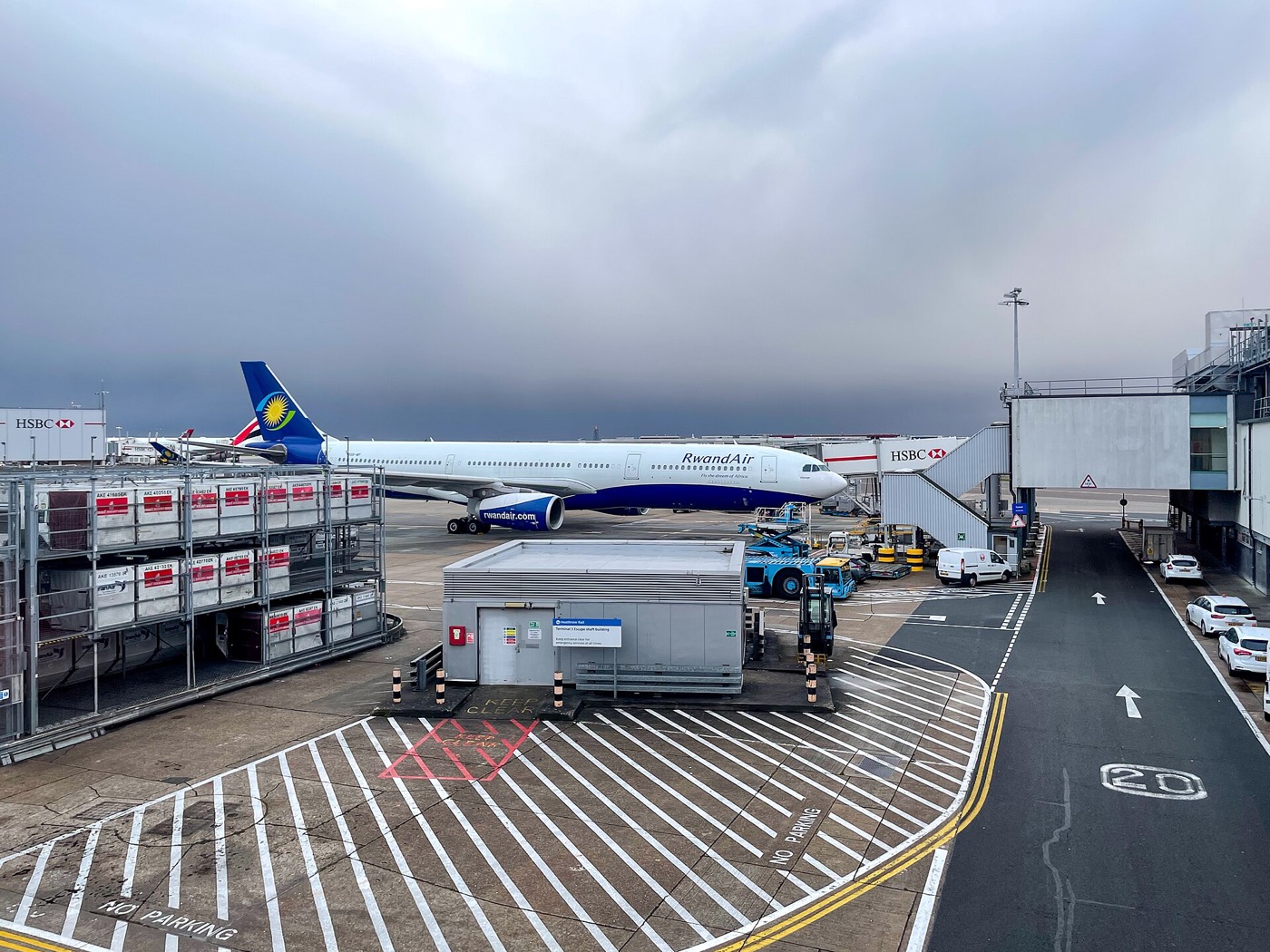
For a landlocked country, air cargo is a valuable trade link. Perishable exports, such as fresh produce and flowers, need cold storage and quick handling so they arrive fresh in overseas markets within a day. Imports such as medicines, spare parts and electronics also arrive by air when speed matters.
Some items, such as lithium batteries, flammable liquids, gases and chemicals, are classed as dangerous goods. They can only be carried under strict rules on packing, labelling, quantity and location in the aircraft. Staff who handle cargo and baggage receive dangerous goods training, and the captain is told what is on board.
SECTION 06The apron and the turnaround
An aircraft earns money only when it is flying, so airlines want it back in the air quickly. The work done on the ground between arriving and departing is called the turnaround (or "turn"). For a narrow-body jet on a short route it can take 45 minutes or less, with many teams working on the aircraft at the same time.
| Task | Team | What they do |
|---|---|---|
| Marshalling and chocks | Ramp agents | Guide the aircraft onto its stand, place wheel chocks and safety cones. |
| Disembark and board | Passenger services | Connect the bridge or stairs and buses; manage the flow of passengers. |
| Unload and load | Baggage and cargo handlers | Remove arriving bags and cargo; load departing items according to the load plan. |
| Refuel | Fuel company | Add the fuel ordered by the flight crew and dispatcher, with strict fire-safety precautions. |
| Cleaning and catering | Cabin cleaners, caterers | Clean the cabin, remove waste, load meals and drinks. |
| Checks | Engineers | Walk around the aircraft, check tyres, fluids and any reported defects, and sign the aircraft off as fit to fly. |
| Paperwork | Load control, dispatch, crew | Finalise the load sheet, fuel figures and flight documents for the captain to sign. |
| Pushback | Tug driver, headset operator | Push the aircraft back from the stand once ATC gives clearance. |
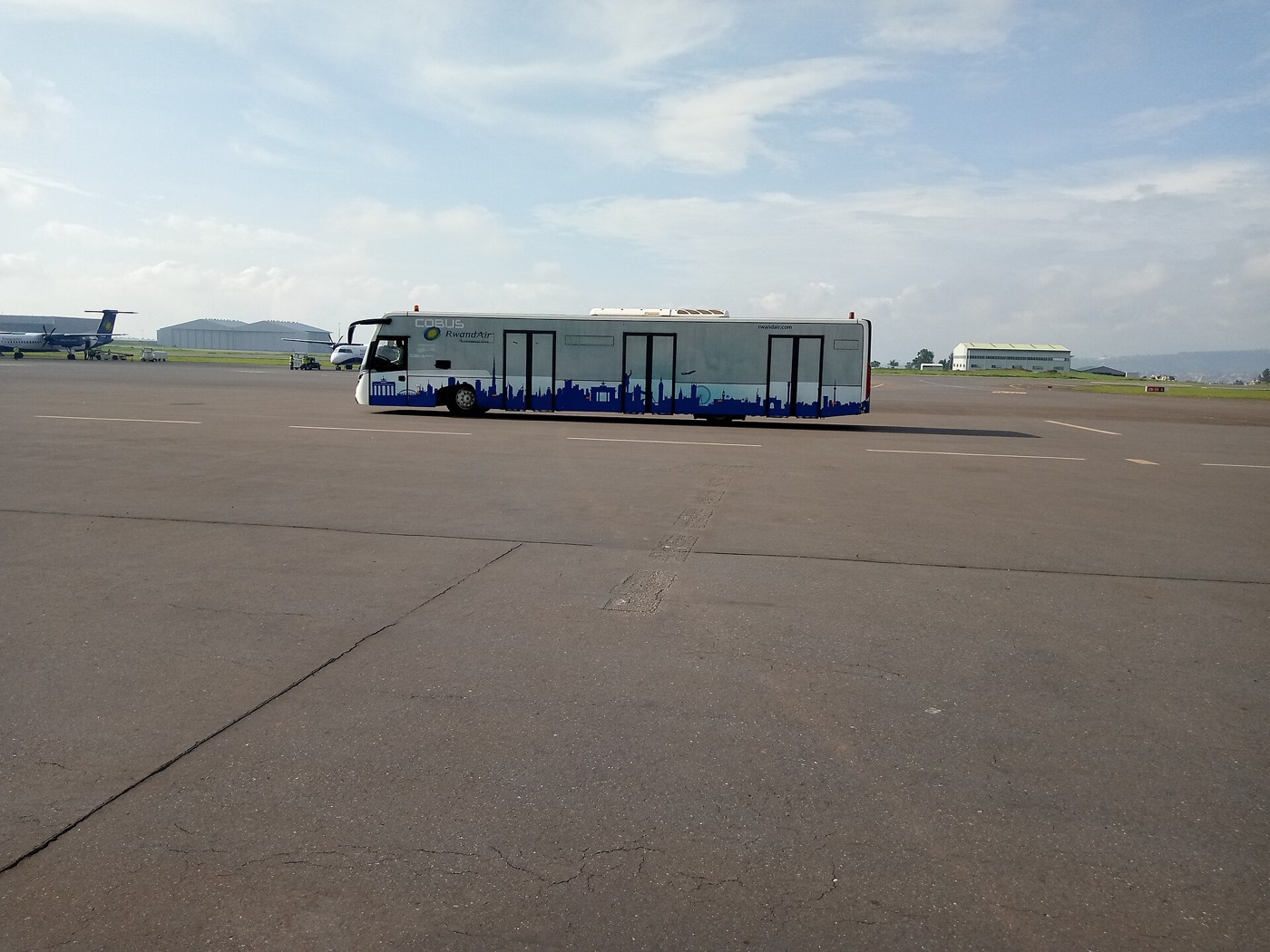
SECTION 07Airport safety and security
Airports separate two related ideas: safety means preventing accidents, and security means preventing deliberate harm.
Myth: "Airports are mostly about passengers."
Fact: Passengers are the visible part. Airports also run fire services, fuel systems, cargo terminals, power plants, engineering hangars and security operations, and most airport workers never deal with passengers directly.
Kigali International Airport handles almost all of Rwanda's international flights. Smaller domestic airports, such as Kamembe in Rusizi near Lake Kivu, link the regions to the capital. Rwanda is also building a new, much larger airport at Bugesera to cope with future growth in passengers and cargo. Airports in Rwanda are operated by Rwanda Airports Company and must meet the safety standards set by the RCAA.
SECTION 08Key words to remember
- Aerodrome
- The official term for any area used for aircraft take-off, landing and movement.
- Landside / airside
- Public area / restricted area, separated by security.
- Apron and stand
- The aircraft parking area, and one parking position on it.
- Manoeuvring area
- Runways and taxiways, controlled by ATC.
- Turnaround
- All the ground work between an aircraft's arrival and its next departure.
- ULD
- Unit load device, a container or pallet used to load bags and cargo.
- FOD
- Foreign object debris: loose items that can damage aircraft.
- Dangerous goods
- Items that can be hazardous in flight and need special handling.
Module summary
- Security divides the airport into public landside and restricted airside.
- Runway numbers are the direction divided by ten: Kigali's runway is 10/28.
- A passenger's journey passes check-in, security, emigration, the lounge and boarding, with a different team at each step.
- Bags and cargo are screened, sorted, loaded and reconciled with passengers.
- A turnaround brings many teams together in under an hour, with coordination at its heart.
- Safety and security run through everything, from FOD walks to fire cover.
CHECK YOUR UNDERSTANDINGModule quiz
Answer the questions, then press Check my answers. Score at least 70% to mark this module as complete.