By the end of this module you will be able to:
- Explain what aviation means and why it is much more than flying
- Describe the key moments in the history of flight
- Name the main organisations in the aviation system and what each one does
- Recognise the different sectors of aviation, with Rwandan examples
- Follow the main steps that bring a single flight together
- Explain why aviation puts safety first, and how it does it
SECTION 01What is aviation?
Stand outside Kigali International Airport for an hour and you will see aircraft land and take off. What you will not see is everything that made those few minutes possible.
Aviation is the design, operation and use of aircraft, together with the whole industry that supports flight: airlines, airports, air traffic control, maintenance, training, regulation, weather services, fuel supply and much more. When people say "aviation" they often picture a pilot in a cockpit. In reality, the pilot is the final link in a long chain of people and organisations.
A useful way to think about it is this: a flight is the visible result of an invisible system. For one aircraft to leave Kigali on time, an airline must have scheduled it, engineers must have certified it safe, a flight dispatcher must have planned its route and fuel, a meteorologist must have forecast the weather, ground staff must have loaded the bags, and an air traffic controller must clear it to take off. If any part of that chain fails, the flight is delayed, or does not go at all.
Aviation is a system, not a job
Because so many groups are involved, aviation has developed a strong habit of clear roles and clear communication. Everyone knows exactly what they are responsible for, and information is passed on in standard formats, such as flight plans, weather reports, load sheets and radio calls, so that nothing is lost between one team and the next. You will see this idea again and again throughout AeroLearn.
When you hear "a career in aviation", do not think only of pilots and cabin crew. Most people who work in aviation never fly the aircraft: they plan it, fix it, guide it, fuel it, load it, protect it or regulate it.
SECTION 02Why aviation matters
Aviation is the only fast way to cross oceans, deserts and mountain ranges, and it has changed how the world trades, travels and responds to emergencies. It matters in four main ways:
For a landlocked country like Rwanda, aviation is especially important. The nearest seaports are well over a thousand kilometres away by road, so air transport is the fastest link to the rest of the world. It supports:
- Tourism: visitors flying in to see the mountain gorillas, Akagera National Park and Lake Kivu.
- Conferences and business: Kigali hosts many international meetings and events, which bring visitors by air.
- Exports: high-value, perishable products can reach overseas markets within a day.
- Health: Rwanda became one of the first countries in the world to use drones to deliver blood and medical supplies to hospitals, starting in 2016.
SECTION 03A short history of flight
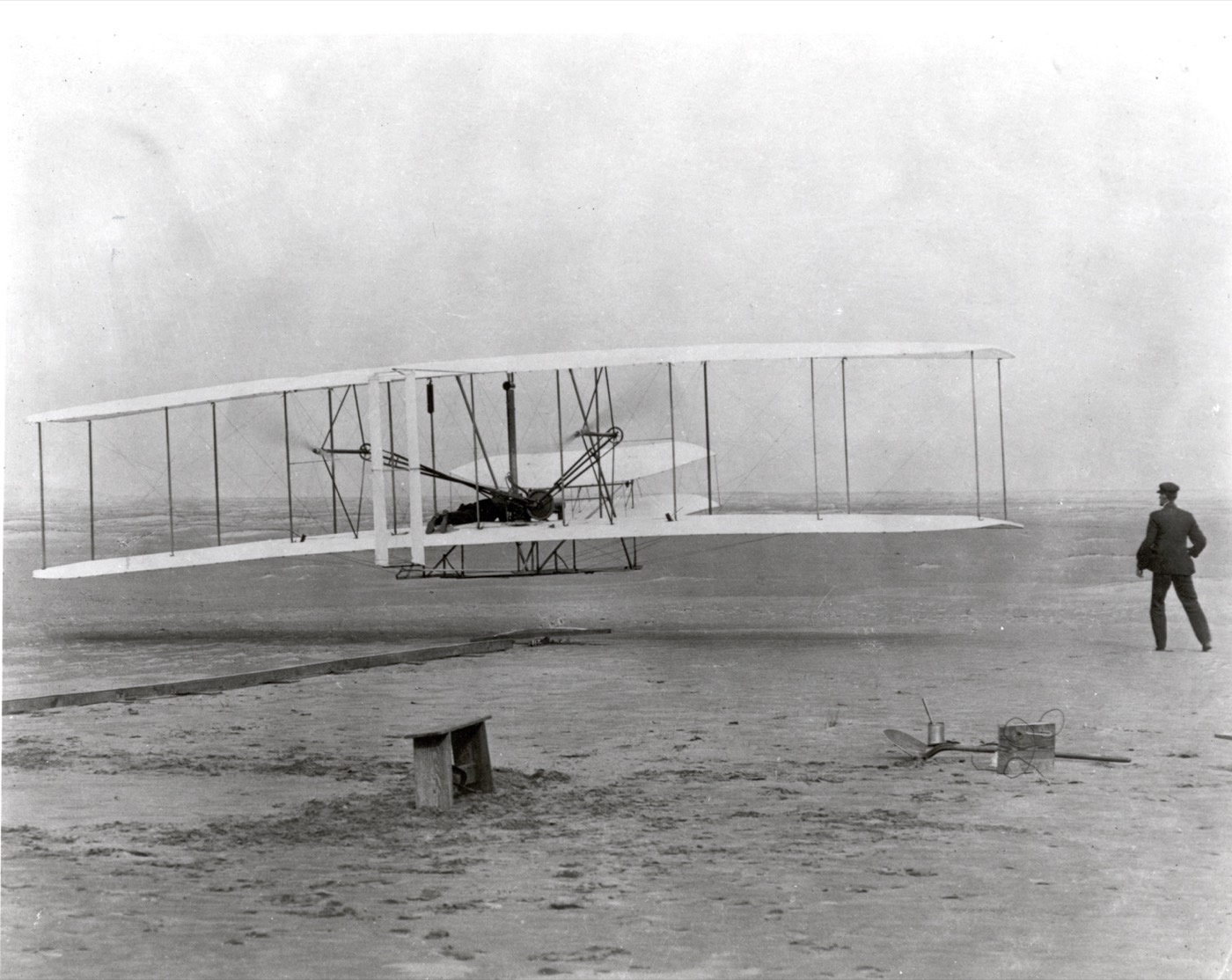
People dreamed of flying for thousands of years, but practical flight is surprisingly recent. In just over a century we went from a few seconds above a sand dune to aircraft carrying hundreds of passengers across the world. Modern aviation did not come from one invention; it grew step by step through better understanding of aerodynamics, engines, materials and navigation.
- BalloonsThe Montgolfier brothers in France fly hot-air balloons, proving that people can travel through the air, but balloons can only drift with the wind.
- GlidersOtto Lilienthal in Germany makes over a thousand glider flights and publishes his results. Engineers start to understand lift and control.
- Powered flightOrville and Wilbur Wright fly the first powered, controlled aeroplane. Their key insight was control: steering the aircraft in all three directions.
- First airlineThe first scheduled passenger airline service begins in Florida, USA, carrying one passenger at a time across Tampa Bay.
- The jet engineThe first jet-powered aircraft flies in Germany. Jets will later allow airliners to fly higher, faster and further.
- The Chicago ConventionCountries agree common rules for international flying. This leads to the creation of ICAO, the UN agency that still sets global aviation standards.
- Jet airlinersThe de Havilland Comet begins the first jet airliner service. Journey times are roughly halved.
- Mass air travelThe Boeing 747 "jumbo jet" enters service and flying becomes affordable for millions.
- Satellite navigationGPS becomes fully available, transforming how aircraft navigate.
- Data, drones and efficiencyModern aircraft use advanced computers, satellite navigation and far more efficient engines. Drones open up entirely new uses of the sky.
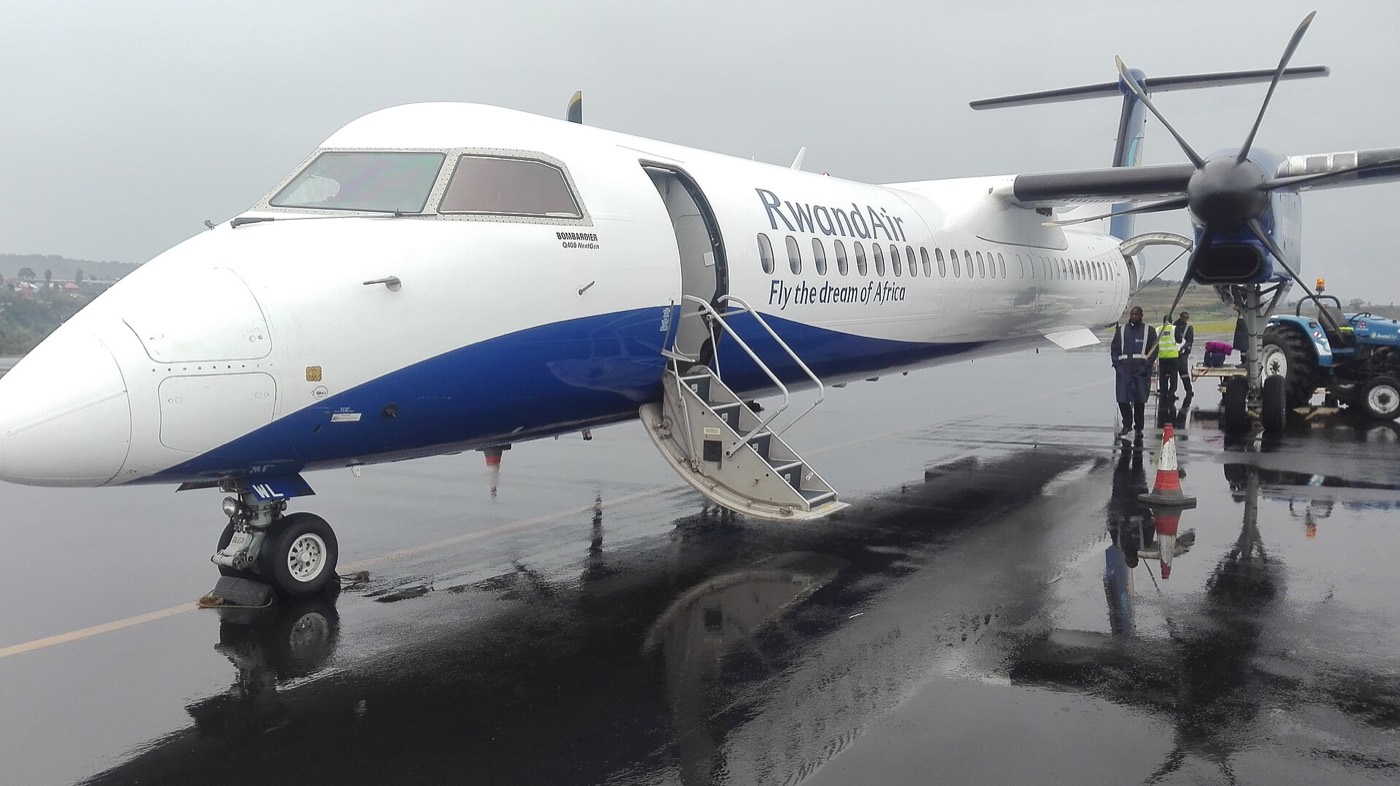
Rwanda's national airline began in the early 2000s and took the name RwandAir in 2009. From its hub at Kigali International Airport it now connects Rwanda with destinations across Africa, the Middle East and Europe. Rwanda is also building a new, much larger international airport at Bugesera, south of Kigali, to support future growth.
SECTION 04How the aviation industry is organised
No single organisation controls a flight. Each one has a clearly defined job, and they are linked together by rules that start at a global level and come down to every individual licence holder.
The main players
| Organisation | What it does | Example in Rwanda |
|---|---|---|
| ICAO (International Civil Aviation Organization) | UN agency based in Montreal. Writes the international standards that member countries agree to follow. | Rwanda is an ICAO member state. |
| National aviation authority | Makes and enforces national aviation regulations, issues licences and certificates, and inspects operators. | Rwanda Civil Aviation Authority (RCAA) |
| Airlines and operators | Run flights carrying passengers or cargo, with their own crews, dispatchers and procedures. | RwandAir, the national carrier, plus foreign airlines flying into Kigali |
| Airport operator | Runs the airport: runways, terminals, security, fire and rescue, and coordination of everyone working there. | Rwanda Airports Company, which manages Kigali International and the country's domestic airports |
| Air navigation services | Air traffic control, aeronautical information, and the communication, navigation and surveillance equipment that keep aircraft safely apart. | Controllers in the Kigali tower and approach units |
| Weather service | Observes and forecasts the weather for aviation: reports every half hour or hour, forecasts and warnings. | Meteo Rwanda (Rwanda Meteorology Agency) |
| Maintenance organisations | Inspect, repair and certify aircraft as airworthy (safe to fly). | Airline and independent maintenance teams |
| Training organisations | Approved schools that train pilots, engineers, dispatchers, cabin crew and others. | Training organisations approved by the RCAA |
Airports and aircraft are identified by codes. Kigali International Airport is KGL (its IATA code, printed on your bag tag) and HRYR (its ICAO code, used by pilots, dispatchers and controllers). All Rwandan ICAO airport codes start with HR, and aircraft registered in Rwanda carry the prefix 9XR- on their fuselage.
SECTION 05The different sectors of aviation
Aviation is not one business but several, each with a different purpose. Some use the same aircraft and airports; their goals and rules can be very different.
| Sector | What it involves | Example |
|---|---|---|
| Commercial air transport | Carrying passengers or cargo for payment, on scheduled routes or as charters. | A RwandAir flight from Kigali to Nairobi |
| Air cargo and logistics | Moving goods by air, in the hold of passenger aircraft or on dedicated freighters. | Exporting fresh produce or importing medicines |
| General aviation | All civil flying that is not scheduled airline service: flight training, private and recreational flying. | A student pilot on a training flight |
| Business aviation | Private jets and charters for companies, governments and individuals. | Delegates arriving for a conference in Kigali |
| Aerial work | Aircraft used for a task: surveying, mapping, crop spraying, filming, inspection. | Mapping land or inspecting power lines |
| Humanitarian and public service | Medical evacuation, disaster relief, search and rescue, police and park patrols. | An air ambulance or a helicopter supporting a national park |
| Military aviation | Aircraft operated by the armed forces for defence, transport and rescue. | Rwanda Air Force operations |
| Drones (RPAS) | Remotely piloted aircraft for delivery, mapping, agriculture and inspection. | Medical drone deliveries to Rwandan hospitals |
SECTION 06How a flight comes together
Let us follow an imaginary morning flight from Kigali to Nairobi. The flight itself takes a little over an hour, but the work starts long before and continues long after.
- Planning the scheduleThe airline's network planners decide the route, timings and aircraft type. The schedule is published and tickets go on sale.
- Crew and aircraft assignedCrew schedulers assign pilots and cabin crew who are qualified and rested. Maintenance confirms which aircraft will fly the route.
- Flight planningThe flight dispatcher studies the weather, chooses the route and altitude, calculates the fuel and checks the aircraft's weight and performance. A flight plan is filed with air traffic services.
- Check-in opensPassengers check in, bags are tagged and screened, and security checks every traveller.
- Crew briefingThe pilots review the flight plan, weather and any notices, and agree the fuel with dispatch. The cabin crew brief on safety and service.
- Aircraft turnaroundEngineers complete their checks. Ground handlers clean, cater, fuel and load the aircraft. The load controller prepares the load sheet.
- BoardingGate agents board passengers. The doors close once the final passenger and baggage numbers match.
- Pushback and take-offThe pilots receive their clearance from air traffic control, push back, taxi and take off from Kigali's runway.
- In the airControllers hand the flight from one sector to the next. Dispatch monitors weather and progress from the ground.
- Landing and afterNairobi controllers guide the aircraft in. Ground staff unload bags and cargo, and the aircraft is prepared for its next flight. Often it is back in the air within an hour.
To avoid confusion between time zones, aviation uses Coordinated Universal Time (UTC), also called "Zulu" time. Rwanda is two hours ahead of UTC, so a flight departing Kigali at 08:00 local time leaves at 06:00 UTC on every flight plan and weather report.
Quick check: who decides how much fuel the aircraft carries?
SECTION 07Safety: the heart of aviation
Commercial air travel is one of the safest ways to travel. That is not luck: it is the result of decades of learning from accidents and designing safety into every part of the system.
Myth: "Safety is the pilot's job."
Fact: Safety is everyone's job. A loose panel spotted by a baggage handler, a weather change noticed by a dispatcher or a fuel figure double-checked by an engineer can matter as much as anything done in the cockpit.
SECTION 08Key words to remember
- Aviation
- The operation of aircraft and the whole industry that supports flight.
- Aircraft
- Any machine that flies by gaining support from the air: aeroplanes, helicopters, gliders, balloons, drones.
- ICAO
- International Civil Aviation Organization, the UN body that sets global aviation standards.
- RCAA
- Rwanda Civil Aviation Authority, Rwanda's aviation regulator.
- Airworthy
- An aircraft that meets its design standard and is in a safe condition to fly.
- Flight plan
- Details of a planned flight (route, altitude, timing, fuel) filed with air traffic services.
- UTC / Zulu
- The single world time used in aviation. Rwanda is UTC+2.
- Commercial air transport
- Flights carrying passengers, cargo or mail for payment.
Module summary
- Aviation is a system. Every flight depends on many organisations and professions working together.
- Flight is young. In about 120 years we went from a 12-second flight to a global network.
- Rules flow from ICAO to national authorities such as the RCAA, to approved organisations and licensed people.
- There are many sectors: airlines, cargo, general aviation, business, aerial work, humanitarian, military and drones.
- For landlocked Rwanda, aviation is a vital link for tourism, trade, health and jobs.
- Safety comes first, and it is everyone's responsibility.
CHECK YOUR UNDERSTANDINGModule quiz
Answer the questions, then press Check my answers. Score at least 70% to mark this module as complete.